
Buyer guide
Tape-In Hair Extensions Wholesale: A Buyer's Guide for Salons and Brands
To buy tape-in hair extensions wholesale, agree the hair quality, drawn grade, colour, length, tape type, piece width and pack size in writing, test samples with your own stylists, and only then place a bulk order with a supplier you have verified.
Key takeaways
- Tape-in extensions are thin wefts of human hair with adhesive tabs, applied in pairs by a stylist so they lie flat.
- A wholesale tape-in order is defined by hair quality, drawn grade, texture, colour, length, tape type, piece width and pack size.
- Tape type and piece width are not standard across the trade, so ask for photos and samples of the exact tabs you will receive.
- Test samples the way your stylists will use them: application, washing, brushing, removal and re-taping.
- Compare written quotes on the same specification, including weight per pack, tape, packaging and shipping.
What are tape-in hair extensions, and who buys them wholesale?
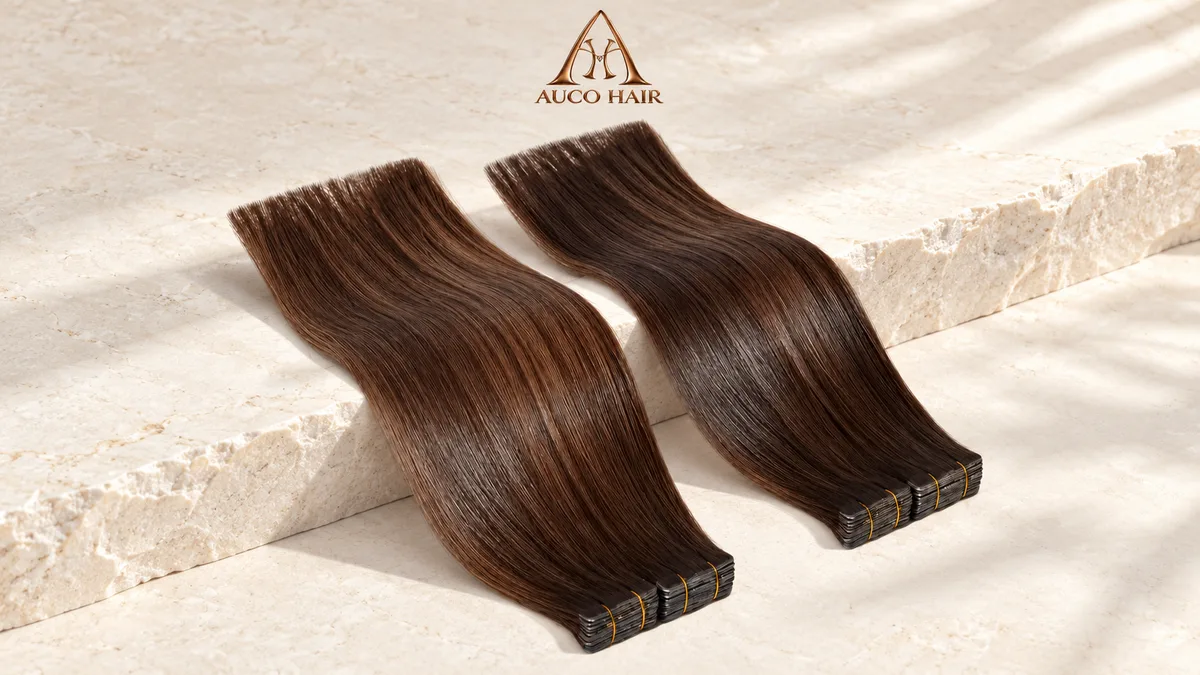
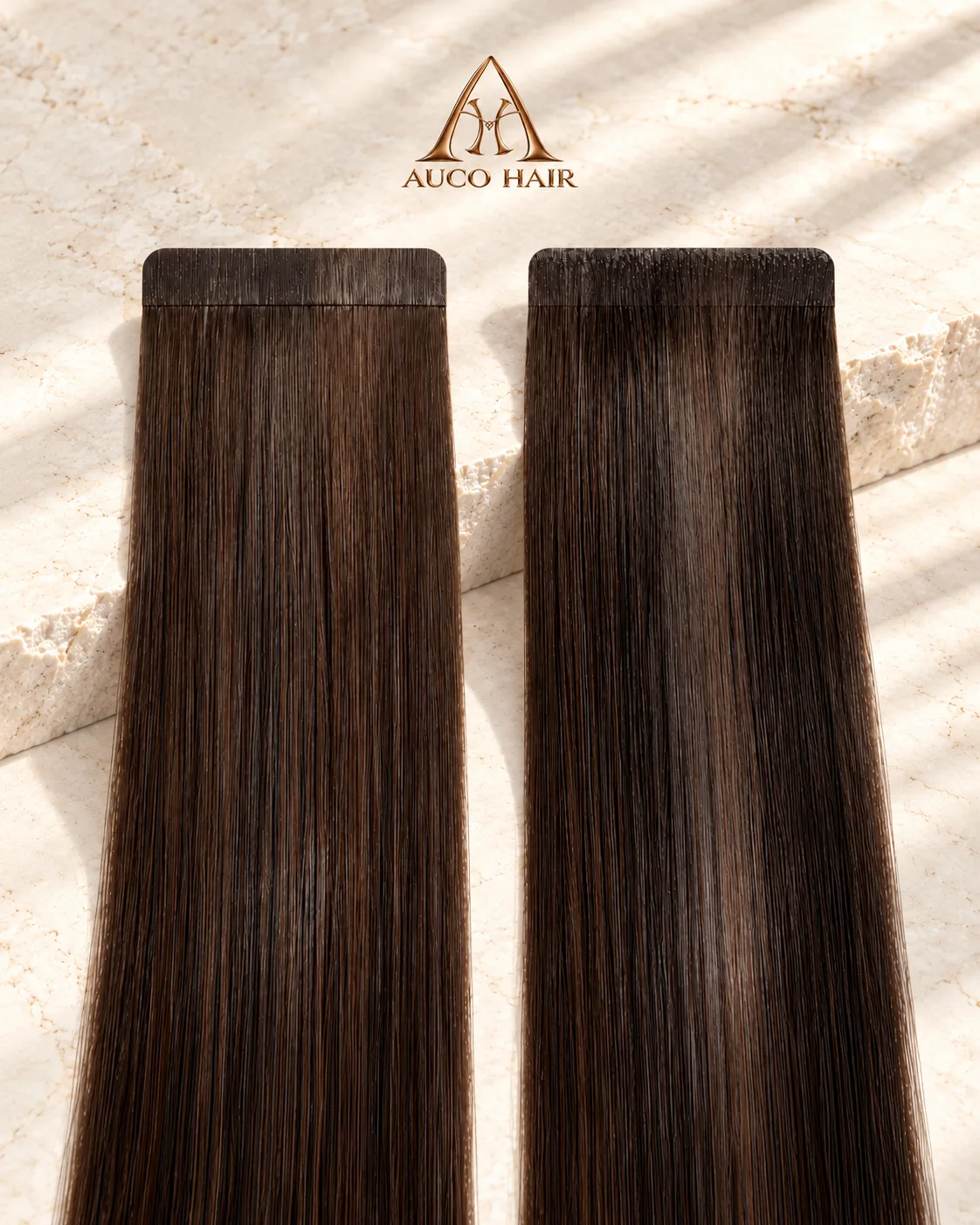
Tape-in hair extensions are thin, flat wefts of human hair with a strip of adhesive tape at the top. A stylist sandwiches a thin section of the client's own hair between two pieces, so the extensions sit flat against the head and move with the natural hair.
Salons and extension specialists buy tape-ins wholesale to keep a stock of colours and lengths for their clients. Extension brands and online sellers buy them to sell under their own name, and distributors buy them to supply other salons. All of them need the same thing: hair that looks the same in every pack they reorder.
Because tape-ins are worn close to the scalp and removed and re-applied over time, the quality of both the hair and the tape matters. A cheap pack that tangles after a few washes, or a tape that slips, costs a salon far more in client complaints than it saved on the order.
What specifications should you agree before ordering tape-ins wholesale?
Agree every specification in the table below in writing before you ask for a final price. Suppliers use different defaults, so two quotes for "tape-in extensions" can describe very different products.
| Specification | What to agree | Why it matters |
|---|---|---|
| Hair quality | Human hair, Remy (cuticles kept in one direction), and whether it is raw or processed | Decides how the hair behaves after washing and how long it lasts |
| Drawn grade | Single drawn, double drawn or super double drawn | Decides how full the ends are compared with the top of the weft |
| Texture | Straight, wavy or curly, and whether the texture is natural or steamed | Must match your clients' own hair |
| Colour | Natural colour or a target shade, and how the shade is matched | Lightened and coloured hair needs extra work and must be agreed in advance |
| Length | Each length you need and how many packs of each | Longer hair is scarcer, so availability changes by length |
| Tape type and piece width | The tab style, the width of each piece and the adhesive used | Stylists are trained on specific tabs and may not accept a change |
| Pack size and weight | Pieces per pack and the weight of each pack | The only fair way to compare prices between suppliers |
| Packaging | Plain packing or your own labels and packaging | Private label packaging must be agreed before production |
Write the agreed specification into your order or invoice. If a later batch looks different, this document is what you compare it with.
How do tape types and piece widths differ?
Tape types and piece widths differ by supplier, and the names are not standard across the trade. Use the general descriptions below as a starting point, then ask each supplier for close-up photos and a sample of the exact tab you will receive.
| Style | General description | Ask the supplier |
|---|---|---|
| Standard tape weft | Hair attached to a flat polyurethane strip with tape on top | How wide is each piece, and which adhesive is used? |
| Injected or seamless tape | Hair set into the strip so the top looks like it grows from the scalp | Can you show the tab close up, from the front and the back? |
| Mini or half tape | Narrower pieces for fine hair or for small areas | Is the hair density the same as on your standard pieces? |
If your stylists already use one system, send the supplier a sample or a clear photo of it and ask for a match. Changing tab width or adhesive in the middle of a client's service is the most common reason a salon rejects a new supplier.
How should you order colours for tape-in extensions?
Order colours against a physical reference, not a colour code alone. The same number can look different between suppliers, so send a strand, a colour ring or a clear daylight photo, and approve a sample before production.
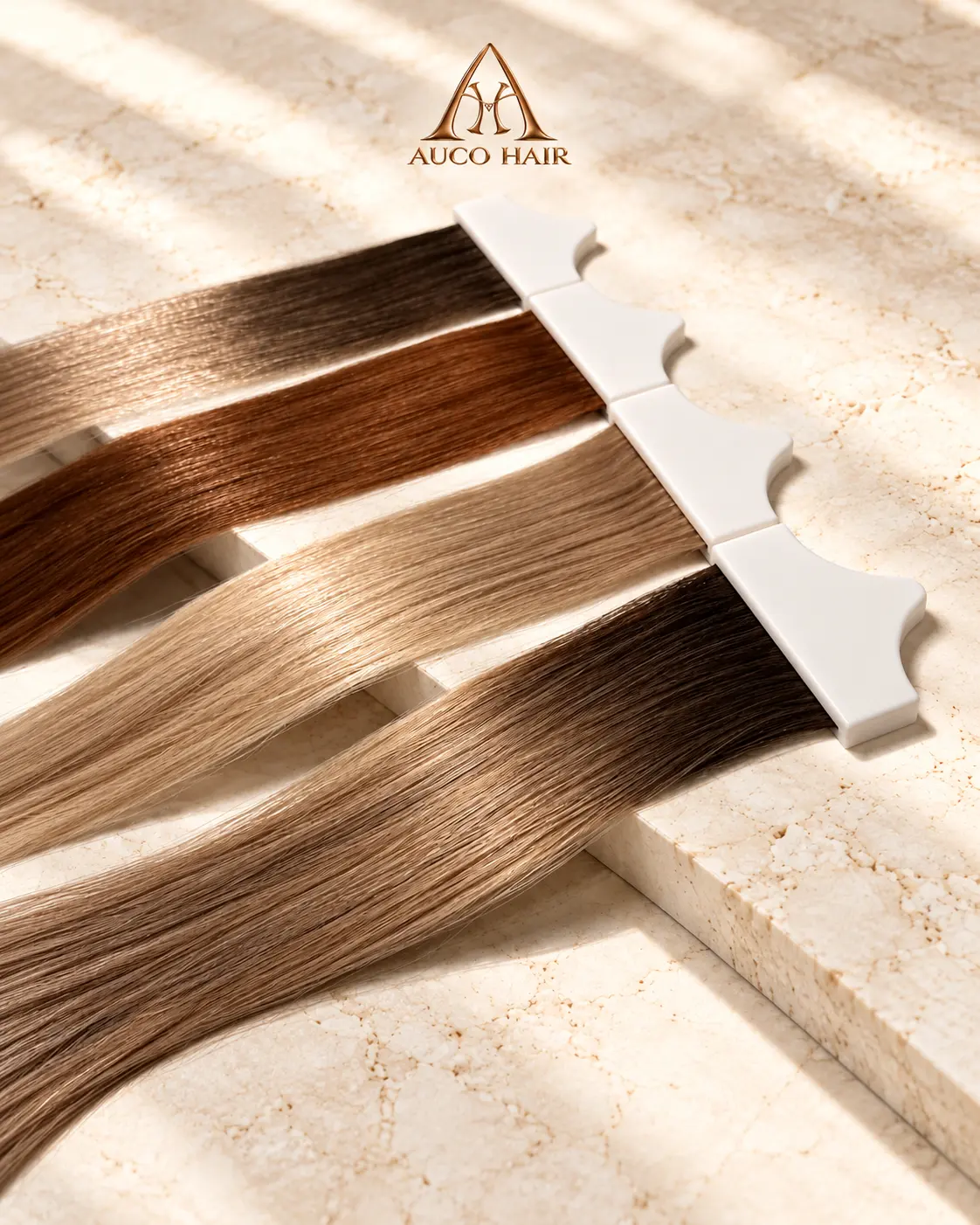
- Start with the shades your clients ask for most often, and add other shades once the first ones sell.
- Ask how each shade is made: natural colour, coloured, or lightened and then toned.
- For blonde and very light shades, ask for a sample from the batch you will receive, because lightened hair varies from lot to lot.
- Check root-to-tip consistency in daylight, and wash the sample once to see whether the colour changes.
How do you choose a tape-in hair extensions supplier or manufacturer?
Choose a supplier you can verify and who controls the hair from sorting to packing. Search results for tape-in suppliers are full of copied profiles and directory listings, so check every name on your shortlist before you pay.
- Check the business details: company name, address, email and a working phone or WhatsApp number.
- Ask who sorts, prepares, checks and packs the hair, and where.
- Ask for a video call to see tape-in pieces from the current stock, including the ends and the tabs.
- Ask for real photos and videos in daylight, not only edited product photos.
- Ask how the supplier handles a batch that does not match the agreed specification, and get the answer in writing.
- Order samples before any bulk order, and keep part of each approved sample to compare with the delivery.
At AUCO HAIR, hair is sorted, prepared, checked and packed in Hiep Hoa, Bac Ninh, in Northern Vietnam, and the AUCO team handles each order directly, from specification to delivery.
For the full buying process for Vietnamese hair, including the questions to ask about raw, virgin and Remy hair, read the guide on how to buy Vietnamese hair wholesale.
How should you test tape-in samples before a bulk order?
Test tape-in samples on a real client or a training head, through a full cycle of wear, washing and removal. A sample that only looks good in its pack tells you very little.
- Application: does the tape hold firmly, and do the pieces lie flat without lifting at the edges?
- Washing: wash and condition the hair several times, then check for tangling, shedding at the tab and changes in colour.
- Brushing: brush from the ends upwards; Remy hair should not feel rough in one direction.
- Fullness: compare the ends with the top against the drawn grade you were quoted.
- Removal and re-taping: remove the pieces with your usual remover and re-tape them, then check the hair and the strip.
- Comparison: keep one approved piece from the sample to compare with every bulk delivery.
What should a tape-in wholesale quote include?
A tape-in quote should state the full specification of each item, so you can compare suppliers on the same product. Ask every supplier to cover these points in writing:
- Hair quality, drawn grade, texture, colour and length for each item.
- Tape type, piece width, pieces per pack and the weight of each pack.
- Packaging, including any private label work.
- Shipping method and destination, and whether shipping is included in the price.
- Payment terms and the stages at which payment is due.
- Production and delivery timing for your specific order.
- What happens if the delivery does not match the approved sample.
Compare quotes on the price per pack of the same weight and specification. A quote far below the others usually means a lighter pack, a different drawn grade or a different hair quality.
How do you order tape-in extensions wholesale from AUCO HAIR?
AUCO HAIR supplies tape-in extensions in Vietnamese human hair to salons, extension brands and distributors. Tape type, piece width and pack size are agreed with each buyer.
- Send the colours, lengths, tape style and estimated quantities you need.
- Receive current wholesale information for your specification.
- Order samples and test them with your stylists.
- Confirm the specification in writing, including packaging and labels.
- Production and quality control, checked against the AUCO Standard.
- Delivery by the method agreed for your destination.
Frequently asked questions
Are wholesale tape-in extensions Remy hair?
Not always. Remy means the cuticles are kept in one direction, which helps the hair stay smooth. Ask the supplier to state in writing whether the hair is Remy, and check it on samples after washing and brushing.
Can tape-in extensions be reused?
Human hair tape-ins can usually be removed and re-taped by a stylist. How many times depends on the hair quality and how the pieces are cared for, so test removal and re-taping on your samples.
How many pieces are in a pack of tape-in extensions?
There is no single standard. Pieces per pack, piece width and pack weight differ by supplier, so agree them in writing and compare quotes on the same pack weight.
Can I sell tape-in extensions under my own brand?
Yes. AUCO HAIR offers private label packaging for wholesale buyers. Labels and packaging are agreed before production.
How do I get AUCO HAIR tape-in wholesale prices?
Send the colours, lengths, tape style and estimated quantities through the wholesale form, or message AUCO on WhatsApp at +84 986 008 888. AUCO replies with current wholesale information.
Start a conversation
Ready to source Vietnamese hair?
Send your shortlist and estimated quantities. AUCO replies with current wholesale information.