Buyer guide
Raw vs Virgin vs Remy Hair: What Each Grade Means for Wholesale Buyers
Raw, virgin and Remy are not three steps on one quality ladder: raw describes how little the hair has been processed, virgin describes whether it has ever been coloured or permed, and Remy describes whether the cuticles still run in one direction. One bundle can be all three, or only one, so a wholesale buyer should check each label separately on a sample.
Key takeaways
- Raw hair means hair that has only been washed and sorted after cutting, with no steaming, colouring, perming or acid treatment.
- Virgin hair means hair that has never been coloured, bleached or permed, but its texture may still have been changed with steam.
- Remy hair means hair whose cuticles all run from root to tip in the same direction, which keeps it smooth and less prone to tangling.
- A label such as raw Remy or virgin Remy combines two separate claims, and each one needs its own evidence.
- Grade names such as 10A or 12A are seller marketing, not an industry standard, so ask what they mean in writing.
- A washing test without conditioner, a cuticle slide test and a strand colour test reveal more about a grade than any photo.
What is the difference between raw, virgin and Remy hair?
Each of the three words answers a different question about the hair. Raw is about processing: has anything been done to the hair beyond washing and sorting? Virgin is about chemical history: has the hair ever been coloured, bleached or permed? Remy is about structure: do the cuticles, the tiny overlapping scales on each hair, still all point from root to tip?
Because the questions are different, the labels do not rank against each other. A bundle can be Remy but not raw, for example when aligned hair has been steamed into a body wave. It can be virgin but not Remy, when uncoloured hair has been collected loose and its cuticles are mixed. Treat each word as a separate claim the supplier has to support.
| Label | What it describes | What it does not tell you | Evidence to ask for |
|---|---|---|---|
| Raw | Hair only washed and sorted after cutting: no steaming, colouring, perming or acid treatment | Whether the cuticles are aligned, or how full the ends are | The texture after a wash with no conditioner, and a written statement that no processing was used |
| Virgin | Hair that has never been coloured, bleached or permed | Whether the texture was changed with steam, or whether the cuticles are aligned | Root and end colour in daylight, and a strand colour test |
| Remy | Hair with every cuticle running from root to tip in the same direction | Whether the hair has been processed or coloured | A cuticle slide test, and how the root ends are kept together during sorting |
| Non-Remy | Hair collected without keeping the root ends together, so cuticles point both ways | Whether a coating has been used to hide the mixed cuticles | A wash with no conditioner, then a brushing test for tangling |
Is raw hair the same as virgin hair?
No: in common trade use, raw hair is always virgin, but virgin hair is not always raw. Virgin hair has never had colour or a perm, yet it can still have been steamed to turn naturally straight hair into a body wave or a deep wave. Raw hair keeps the texture it grew with, so a lot of raw wavy hair often varies a little from bundle to bundle.
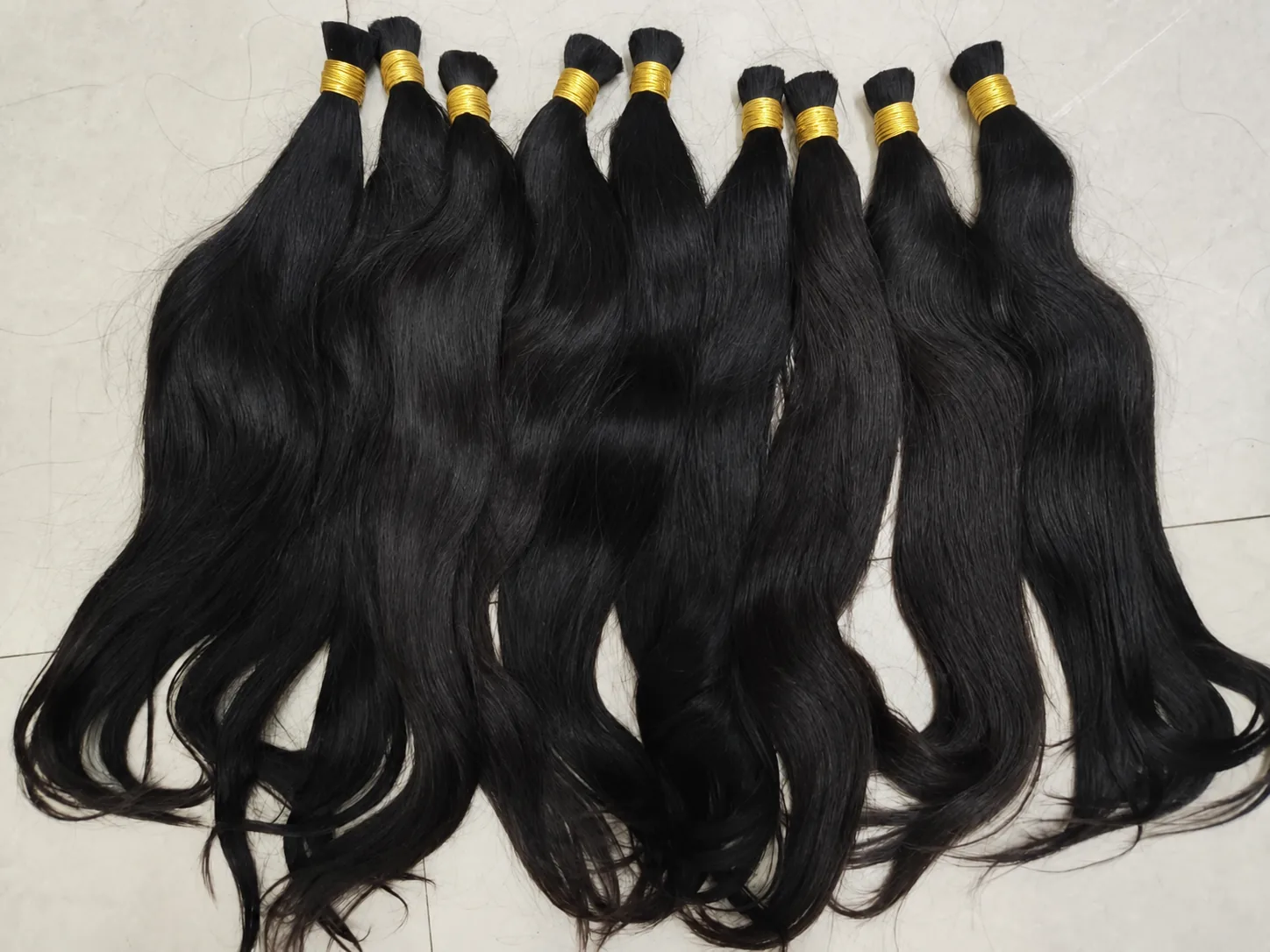
The difference matters most when your customers wash the hair. A steamed texture can loosen after repeated washing, while a natural texture returns after each wash. If you sell a texture by name, ask the supplier whether it is natural or steamed and put the answer on your order.
| Label on the listing | What it should mean | The claim to check first |
|---|---|---|
| Raw Remy | Unprocessed hair with aligned cuticles | No steaming: the texture after an unconditioned wash should match the photos |
| Virgin Remy | Never coloured or permed, cuticles aligned, texture may be steamed | Natural or steamed texture, stated in writing |
| Remy | Cuticles aligned; the hair may be coloured or processed | Colour history, since Remy alone says nothing about colour |
| 100% human hair | Human hair, with no claim about processing or cuticles | Treat it as non-Remy until a sample shows otherwise |
What does Remy mean, and why does cuticle direction matter?
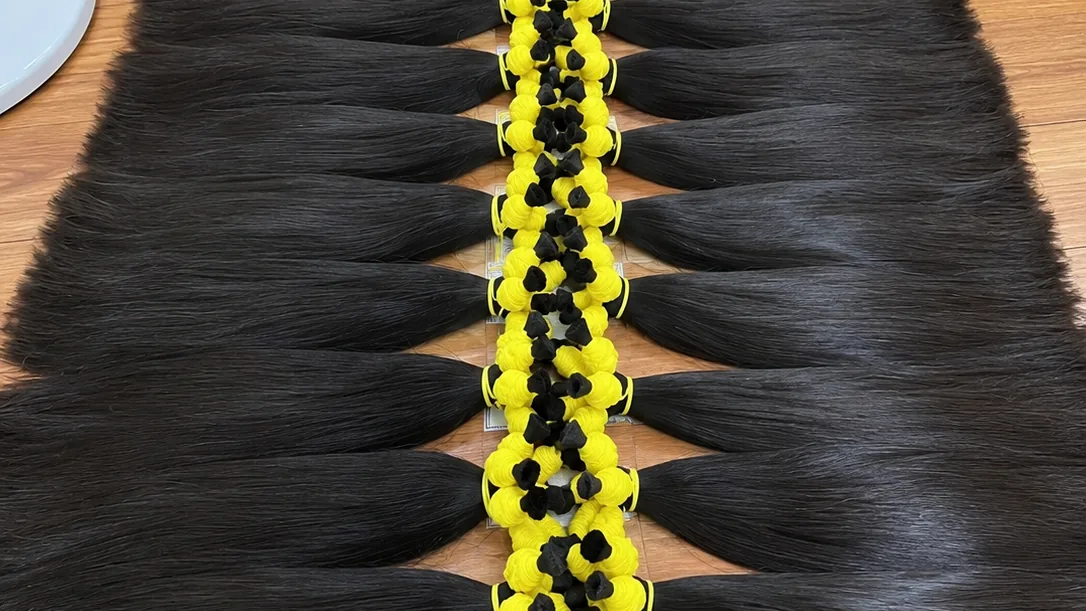
Remy means that the hair was kept in the same order it grew, with the root ends held together, so every cuticle on every hair points from root to tip. When the cuticles all face one way they lie flat against each other, the hair slides smoothly, reflects light evenly and resists tangling.
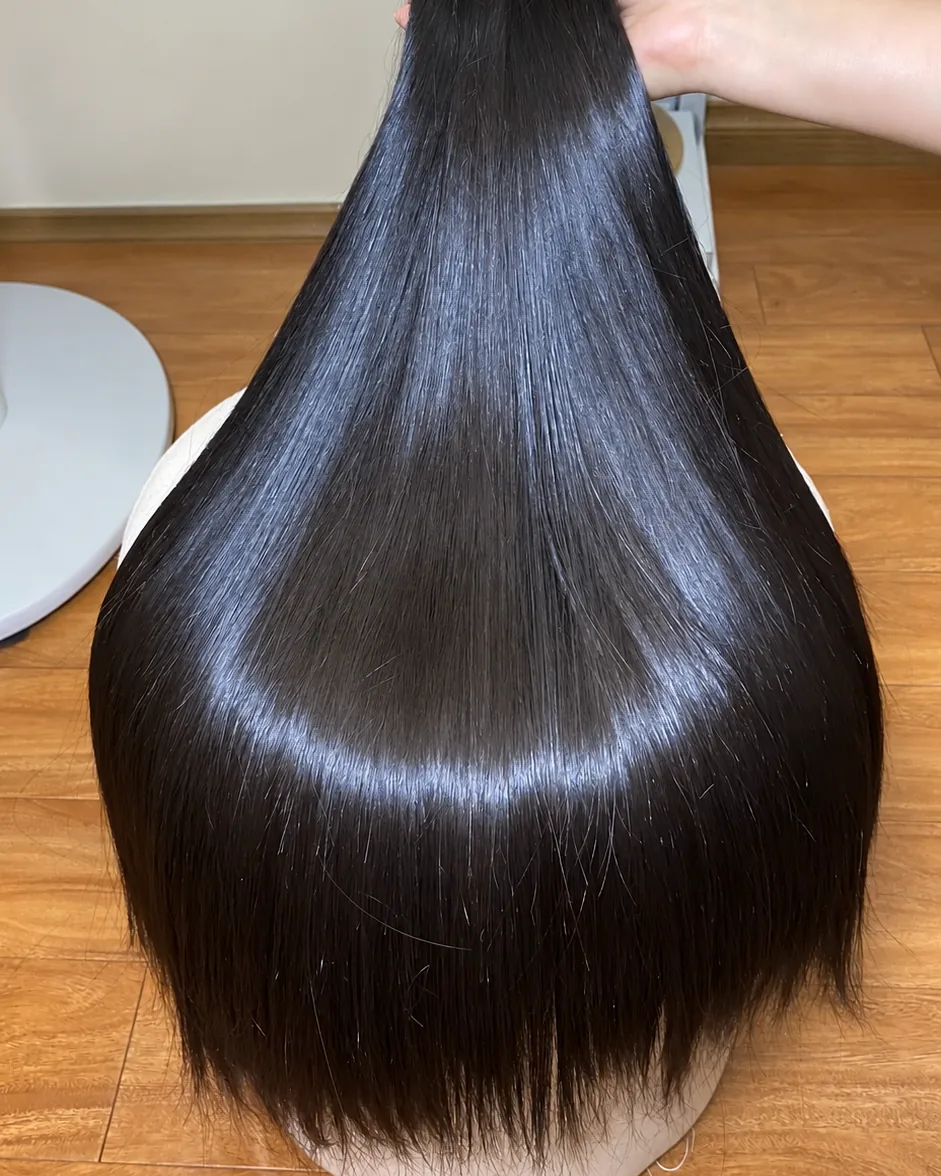
In non-Remy hair some hairs are upside down, so their cuticles catch on the cuticles of the hairs next to them. That is what makes non-Remy hair matt and tangle after a few washes. Some non-Remy hair is treated to strip or soften the cuticles and then coated with silicone, which makes it look glossy in photos and in a new bundle. The coating washes out over time, so the shine of an unwashed bundle proves very little.
For extensions and wigs that are worn and washed for months, Remy hair is the baseline most salons and brands expect. For uses where the hair is washed rarely or replaced often, some buyers accept non-Remy hair, but only when it is sold under that name and priced as such.
How can you check the grade of a hair sample yourself?
Use simple tests that each answer one of the three questions, and run them on the sample itself rather than on photos. Write down the result of each test next to the label the supplier gave you.
| Test | How to do it | What it can show | What it cannot prove |
|---|---|---|---|
| Cuticle slide | Hold one hair at the root end and slide two fingers from tip to root, then from root to tip | Remy hair feels smooth one way and slightly rough the other; mixed hair feels rough both ways | Whether the hair has been steamed or coloured |
| Unconditioned wash | Wash a strand with plain shampoo, no conditioner, and let it dry naturally | Whether a coating was hiding tangles or dullness, and whether the texture holds | Where the hair came from |
| Brush after washing | Brush the washed strand from the ends upwards several times | Tangling and matting point to mixed cuticles | The colour history of the hair |
| Root and end colour | Look at the colour near the band and at the ends in daylight | Dye usually looks flat and even from top to ends; natural hair varies slightly | Whether the texture is natural |
| Strand colour test | Lighten a few hairs with your own colour process | Whether the hair lifts evenly, as unprocessed hair usually does | Whether a whole lot will lift the same way |
| Burn test | Burn one or two hairs over a sink | Human hair burns to a powdery ash with a smell of burnt protein; synthetic fibre melts into a hard bead | Anything about raw, virgin or Remy: all human hair burns the same way |
Keep a labelled piece of each sample after testing. When the bulk order arrives, run the same unconditioned wash and cuticle slide on a few hairs from it and compare the results side by side.
What should a specification sheet say about the hair grade?
Replace one-word labels with a sentence that describes what was and was not done to the hair. Precise wording gives you something to check the delivery against, and it shows quickly whether two suppliers are quoting for the same product.
| Vague wording | Precise wording to ask for |
|---|---|
| 100% raw hair | Washed and sorted only; no steaming, colouring, bleaching, perming or acid treatment |
| Virgin hair | Never coloured, bleached or permed; texture natural, or texture steamed (state which) |
| Remy hair | Root ends kept together during collection and sorting; all cuticles run from root to tip |
| Grade 10A, 12A or similar | A description of processing, cuticle direction and drawn grade instead of a grade number |
| Natural colour | Colour as grown, not dyed; the expected range of shades within the lot |
Fullness from top to ends (single drawn or double drawn) is a separate specification from the grade. Agree it on the same sheet, together with length, colour and texture; the guide on how to buy Vietnamese hair wholesale lists every point a full order needs.
Which questions about hair grades should you ask a supplier?
Ask questions that make the supplier describe the process behind each label, not just repeat it. A supplier who knows the hair will answer them directly.
- How are the root ends kept together from collection to wefting or bundling?
- Has any hair in this lot been steamed, and if so, which textures?
- Has the hair been through an acid bath or a silicone finish at any stage?
- What do you mean by each grade name on your price list, written out in full?
- Can you wash a strand from this lot without conditioner on a video call and show it dry?
- If a delivery fails the same tests as the approved sample, what happens to the order?
At AUCO HAIR, hair is sorted, checked and packed in Hiep Hoa, Bac Ninh, and the AUCO team handles each order directly, from specification to delivery, so these questions reach the people who prepare the hair.
Which hair grade suits salons, brands and distributors?
The right grade depends on what will happen to the hair after you buy it. Choose the claims that matter for your use and pay for those, rather than the longest label.
| Buyer | Claims that matter most | Why |
|---|---|---|
| Extension salon | Remy, plus a stated texture | Clients wear and wash the hair for months, so tangling is the most common complaint |
| Wig maker who colours hair | Raw or virgin, plus Remy | Unprocessed hair takes colour more predictably, and a wig is styled and washed many times |
| Extension or wig brand | Remy, with the grade written on the specification sheet | Your label carries the promise, so every batch has to match the first |
| Distributor stocking many textures | Remy, with natural or steamed texture stated for each item | Your customers need to know how each texture behaves after washing |
If you are building a range, you can buy more than one grade, as long as each is named honestly on your own listings. Raw Vietnamese hair is one of the AUCO categories for buyers who need unprocessed hair.
How do you order graded hair wholesale from AUCO HAIR?
Describe the grade you need with the precise wording from this guide, and AUCO HAIR confirms the specification with you in writing before production.
- Send the category, texture, length, colour and the grade wording you need.
- Add the quantities you expect to order for each item.
- Receive current wholesale information for that specification.
- Order samples and run the tests in this guide.
- Approve the specification sheet, including the grade wording, in writing.
Frequently asked questions
Is Remy hair better than raw hair?
Neither is better in general, because they describe different things. Remy is about cuticle direction and raw is about processing. Hair can be both raw and Remy, which is what most buyers looking for unprocessed hair want.
Is 100% Remy hair real human hair?
Yes. Remy is a term for human hair whose cuticles run in one direction. It does not tell you whether the hair has been steamed or coloured, so ask about processing separately.
How can you tell if hair is raw?
Wash a strand with plain shampoo and no conditioner and let it dry naturally. Raw hair keeps its texture, shows slight natural colour variation and does not feel coated. Confirm the result with a written statement from the supplier that no processing was used.
What do 10A or 12A hair grades mean?
There is no industry standard behind grade numbers such as 10A or 12A. Each seller uses them differently, so ask for a written description of processing, cuticle direction and drawn grade instead.
Can raw or virgin hair be bleached?
Unprocessed hair usually lightens more evenly than processed hair, but the result depends on the lot and the target shade. Test a few hairs from the sample with your own colour process before you order hair for colouring.
Start a conversation
Ready to source Vietnamese hair?
Send your shortlist and estimated quantities. AUCO replies with current wholesale information.